
Port Hueneme City Directory Collections
The known Port Hueneme historical shelf is a set of regional collections, not one complete run. NARA lists Ventura-area microfilm for 1930 to 1931 and 1934. FamilySearch has a national United States City and Business Directories collection from about 1749 to about 1990. Its catalog also points to a Polk's Oxnard directory that includes Port Hueneme and El Rio. Exact volume years and publishers for every local Polk book were not exposed, so the year field remains a research question rather than a guess.
| Collection | Years or Extent | Where Held | Access |
|---|---|---|---|
| Ventura-area regional volumes | 1930-31 and 1934 | National Archives microfilm inventory | Microfilm reference |
| Polk's Oxnard directory including Port Hueneme and El Rio | Exact run unresolved | FamilySearch, California State Library, MVC inquiry | Verify volume and access |
| United States City and Business Directories | About 1749 to about 1990 nationally | FamilySearch collection | Free account may be needed |
| Ventura County local-history material | Local books and microfilm; years not listed as one run | Ventura County Library | Library computers and readers |
| Museum research holdings | 170,000+ items; photos 1864 onward | Museum of Ventura County | Appointment Wednesday-Friday, 11-5 |
That gap is useful information. Ask for the exact title, publisher, volume year, call number, and whether the book has alphabetical and street sections. A catalog record that says “Oxnard” may be the correct place to find a Port Hueneme household.
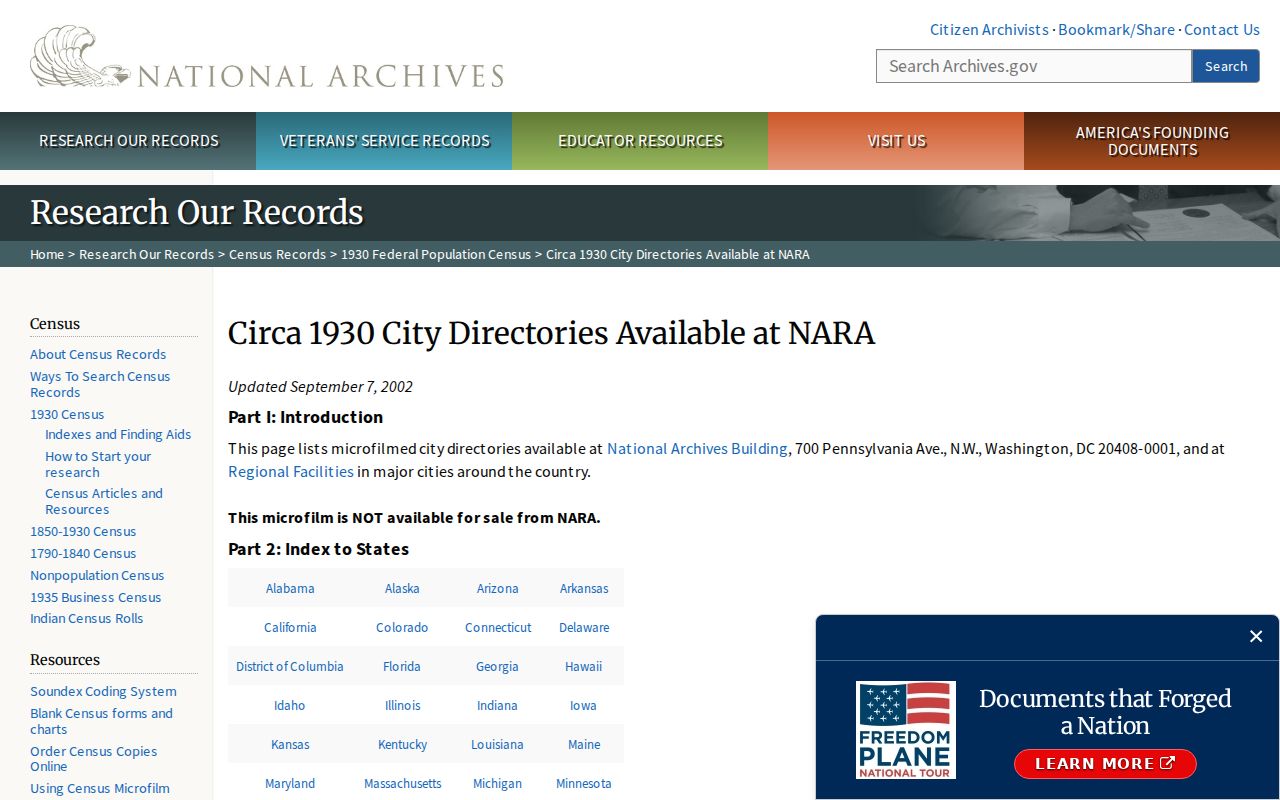
The National Archives city-directory inventory identifies the Ventura-area microfilm bridge.
Port Hueneme Library Directory Shelf
The Ventura County Library local-history route is the practical first stop for a Port Hueneme directory search. Prueter Library is at 510 Park Avenue and connects readers to the county catalog, microfilm readers, local-history resources, genealogy databases, and Ancestry Library Edition on library computers. A librarian can help identify whether a regional volume is shelved under Oxnard, Ventura, Hueneme, or a broader county title.
Bring a full name, approximate year, street spelling, and the place variants. Ask whether a telephone book, reverse directory, yearbook, newspaper index, or obituary aid sits near the historical shelf. Do not assume a missing online scan means the book is absent. Printed volumes can be available only at a reader or reference desk.
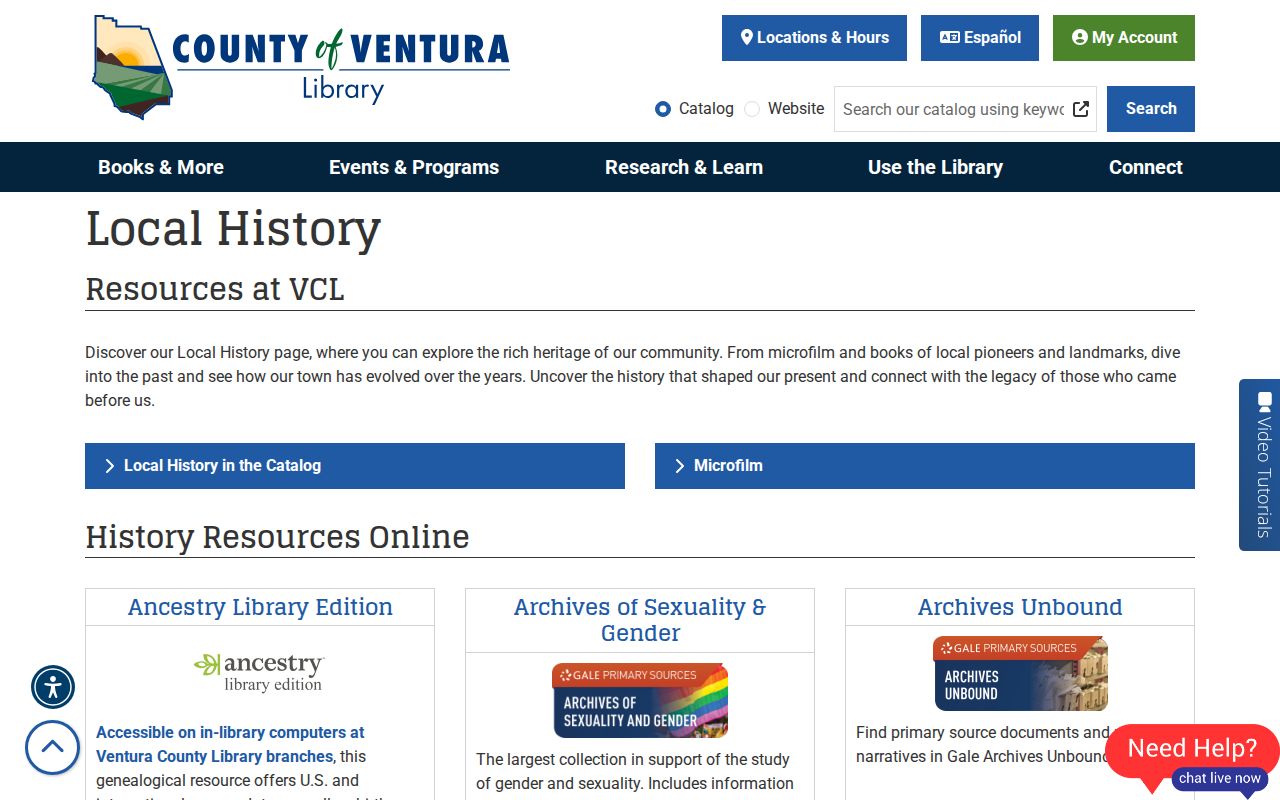
The Ventura County Library local-history page is the best starting point for shelves, microfilm, and in-library genealogy access.
Oxnard City Directories for Port Hueneme
Polk's Oxnard directory is the key catalog quirk for Port Hueneme. The collection is described as including Port Hueneme and El Rio, so a search limited to “Port Hueneme” can miss the volume. Test Oxnard first, then inspect the geographic scope and street section. Hueneme's 1939 name change and 1948 incorporation make older regional labeling expected, not suspicious.
The FamilySearch United States City and Business Directories collection offers a digital route, although a free account may be required. The exact local city directory scan, publisher sequence, and reverse-directory run still need confirmation. The California State Library and the Museum of Ventura County Research Library are the right places to ask for an exact year rather than infer one from a catalog label.
Note: Record the catalog's title exactly, including “Oxnard,” before requesting a volume, because the regional label may be the path to a Port Hueneme entry.
Reading Port Hueneme City Directory Entries
A Port Hueneme directory entry is a compact snapshot. Start with the alphabetical listing, copy every mark, and then find the abbreviation key. The entry may identify a surname and given name, spouse in parentheses, widow notation, occupation or business line, residence, business address, and an owner or renter mark. The street section can reveal who else was listed at the same address in that volume.
| Name | Head of household or individual name; a spouse may appear in parentheses. |
|---|---|
| Occupation | A trade or work description that helps separate two people with similar names. |
| Address | House number and street, sometimes with a residence or business abbreviation. |
| Owner or renter mark | A historical notation whose symbol and meaning must be checked in that volume. |
| Widow notation | A family-history clue, not a complete vital record. |
- Criss-cross directory
- A reverse section arranged by street address instead of surname.
- Householder index
- A name or address aid that points toward a listed household in a defined year.
- Abbreviation key
- The volume's guide to short forms, symbols, and marks; photograph or transcribe it first.
Port Hueneme Reverse Directory Clues
A reverse city directory is useful when the starting clue is an old street address. Turn to the street section, copy the listed name and any companion information, then confirm the alphabetical entry. The reverse result may omit an unlisted household, use a business address, or reflect the book's publication date rather than the date a person moved.
The local reverse run is not yet identified with an exact authoritative year span. Ask Ventura County Library, the California State Library, or MVC about criss-cross and telephone-book holdings. The Port Hueneme street directory page owns current parcel and deed work, while this historical route belongs with the older collections. For a modern address chain, use the Port Hueneme street directory workflow.
Port Hueneme Archive Beyond Directories
The Museum of Ventura County Research Library extends the historical search beyond printed books. Its holdings include manuscripts, club, corporate, and government records, maps, more than 100,000 photographs, oral histories, and biographical clippings. The museum in the 1925 former Bank of Hueneme is a hyper-local place to identify people or places in photographs. The research library receives visitors by appointment Wednesday through Friday from 11 to 5, and access is free.
MVC also points toward maritime, harbor, veteran, and regional material. The Ventura passenger and crew list from 1929 through 1956 can connect a port worker to a vessel or explain why a directory entry disappears. Navy and Seabee collections, Oxnard Harbor District material, and local chamber records may hold an affiliation absent from a household listing.
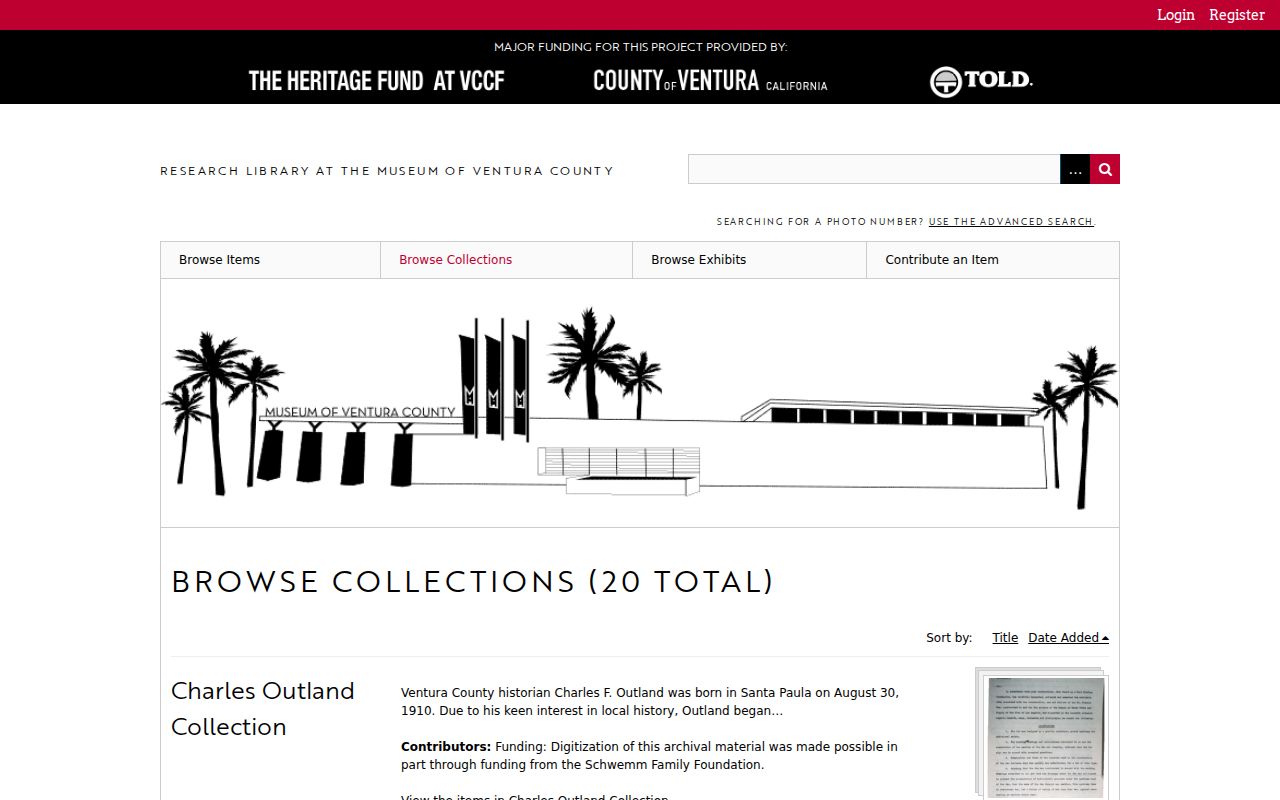
The Museum of Ventura County Research Library holdings page describes the archive that surrounds the Port Hueneme city directory shelf.
Port Hueneme Census Checkpoints
Pairing a directory volume with the federal census gives a household two dated snapshots. Public federal census schedules run through 1950 under the 72-year rule. Use the 1930, 1940, and 1950 schedules to test a surname, street, household member, and broad age pattern. A directory may appear in an intervening year and fill a move that a decade census misses.
- Find the earliest directory entry under Hueneme, Port Hueneme, Oxnard, and Ventura County variants.
- Copy the address, spouse or household notation, occupation, and abbreviation meanings.
- Check the nearest public census year for the same surname and street or household.
- Search the next directory volume and note whether the address, name, or household changes.
- Use a deed, obituary, probate record, or museum file to explain a disappearance.
A mismatch is not failure. A directory can omit a person, a census can use a different street spelling, and a household can move between dates. Keep the source and date beside every conclusion.
Port Hueneme Military Directory Gaps
Port Hueneme's wartime history changes how a missing directory entry should be read. The Oxnard Harbor District formed in 1937, the harbor was built in the late 1930s, and the federal government took it in 1942 while building a naval base. World War II brought Seabees, naval construction, defense, port, and agricultural connections. A 1940s disappearance can reflect service, a new base address, a regional move, or a publisher's coverage choice.
Test Navy and Seabee Museum material, MVC veterans' oral histories, the port and harbor district collections, and the Ventura passenger and crew list. These sources do not replace the city directory. They give a different affiliation trail when a printed book stops being a good fit for the person.
Using Port Hueneme City Directories
For a family-history question, use a Port Hueneme volume as a dated stepping stone. Follow one name forward and backward, but do not read a single line as proof of current residence or a legal relationship. A directory can suggest a spouse, a trade, or an address. A certified vital record, deed, court file, or probate record is the proper next source when the point matters.
- Choose a likely volume and search all four place-name variants.
- Transcribe the alphabetical entry, street entry, abbreviation key, and publication year.
- Compare the address with a census, deed, Sanborn map, or permit date.
- Step to the prior or next volume and record each move, name change, or household change.
- Close the trail with an obituary, probate file, museum clipping, or eligible vital-record request.
The exact-year shelf remains partly unresolved. Ask for the publisher, volume number, coverage, reverse section, and scan status. A careful gap is better than a made-up run.
Port Hueneme Directory Timeline
| Year or Era | Record-Keeping Event | Why It Matters |
|---|---|---|
| 1873 | Ventura County separated from Santa Barbara County. | Pre-1873 searches may follow Santa Barbara-era series. |
| 1888, 1892, 1929-1950 | Sanborn map coverage cited for Hueneme. | Building footprint and use can be compared with a directory address. |
| 1930-31 and 1934 | NARA Ventura-area directory inventory. | Microfilm bridge for the regional historical shelf. |
| 1939 and 1948 | Hueneme became Port Hueneme; incorporation followed. | Place-name searches must use old and new labels. |
| 1950 | Latest public census schedule in the standard historical run. | Useful checkpoint for a directory household. |
This timeline explains why a directory search may cross county, regional, military, and archive shelves. Modern address-keyed records belong with the Port Hueneme resident lookup workflow when the goal shifts from a historical household to one person.